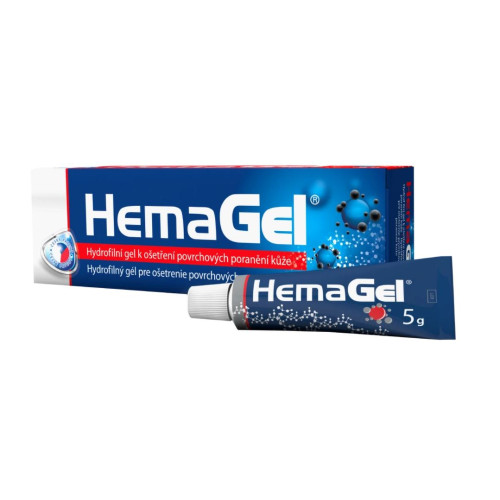
HemaGel is a hydrophilic wound gel for the care of minor superficial wounds and skin injuries, including those in people with diabetes. It is suitable for abrasions, scratches, minor cuts and other shallow skin injuries that require careful protection and regular wound care.
HemaGel creates a moist wound environment that supports the natural healing process. The hydrogel helps prevent the wound surface from drying out, absorbs wound exudate and forms a soft protective layer over the affected area.
For people with diabetes, even a small skin injury deserves particular attention. HemaGel can be used for the care of minor superficial skin wounds on the feet, such as small abrasions, scratches and shallow cuts, provided there are no signs of infection and the wound is not a chronic ulcer.
The compact 5 g tube is convenient for a home first-aid kit, diabetes supply bag and travel, making it easy to keep wound-care gel available when needed.
How to use HemaGel
1. Before first use, read the manufacturer’s instructions carefully.
2. Gently rinse the affected area with clean water.
3. Remove dirt and any remaining gel from the previous application.
4. Apply HemaGel in a thin layer up to 1 mm, extending slightly onto the healthy skin around the wound.
5. If the gel may rub off against clothing, footwear or during movement, cover the area with a suitable non-absorbent wound dressing.
- Secure the dressing with a bandage or plaster if needed.
Brand - HemaGel
Manufacturer - VH Pharma
Type - hydrophilic gel for superficial wounds
Volume - 5 g
Suitable for - abrasions, scratches, minor cuts and small superficial skin wounds
For people with diabetes - suitable for care of minor superficial skin injuries, including on the feet
Action - supports a moist wound environment, protects the wound surface and absorbs wound exudate
Use - external
*Important: read the manufacturer’s instructions before use. HemaGel 5 g is not intended for self-treatment of diabetic foot ulcers, deep, infected, chronic or non-healing wounds. People with diabetes should closely monitor any foot injury. Seek medical advice if redness, swelling, increasing pain, discharge or delayed healing occurs.